Selection guides
HVAC Prefilter Buying Guide: Panel, Pleated, Bag and Box Filters
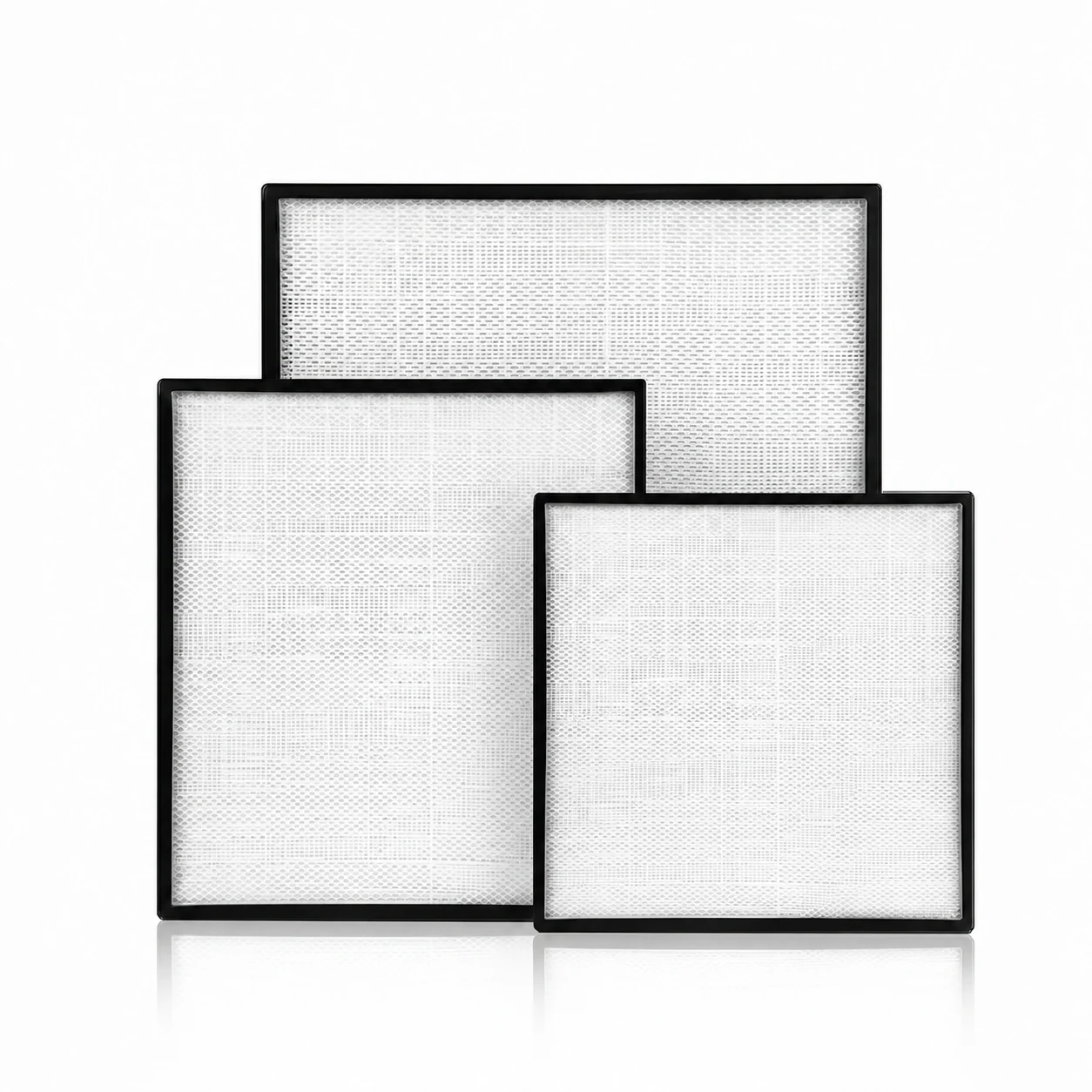
Pleated prefilters are a good starting point for commercial HVAC and outdoor-air units. Flat-panel filters suit shallow slots and light dust loads. Bag filters suit heavier dust loads when the unit has room for the pockets to expand. Box filters are worth evaluating for high-airflow systems that require modular installation or service. For hot, humid or washdown applications, metal mesh is an option if the complete assembly meets the temperature, corrosion and cleaning requirements. The final choice should match the specified efficiency, initial pressure drop at operating airflow, measured dimensions and seal design.
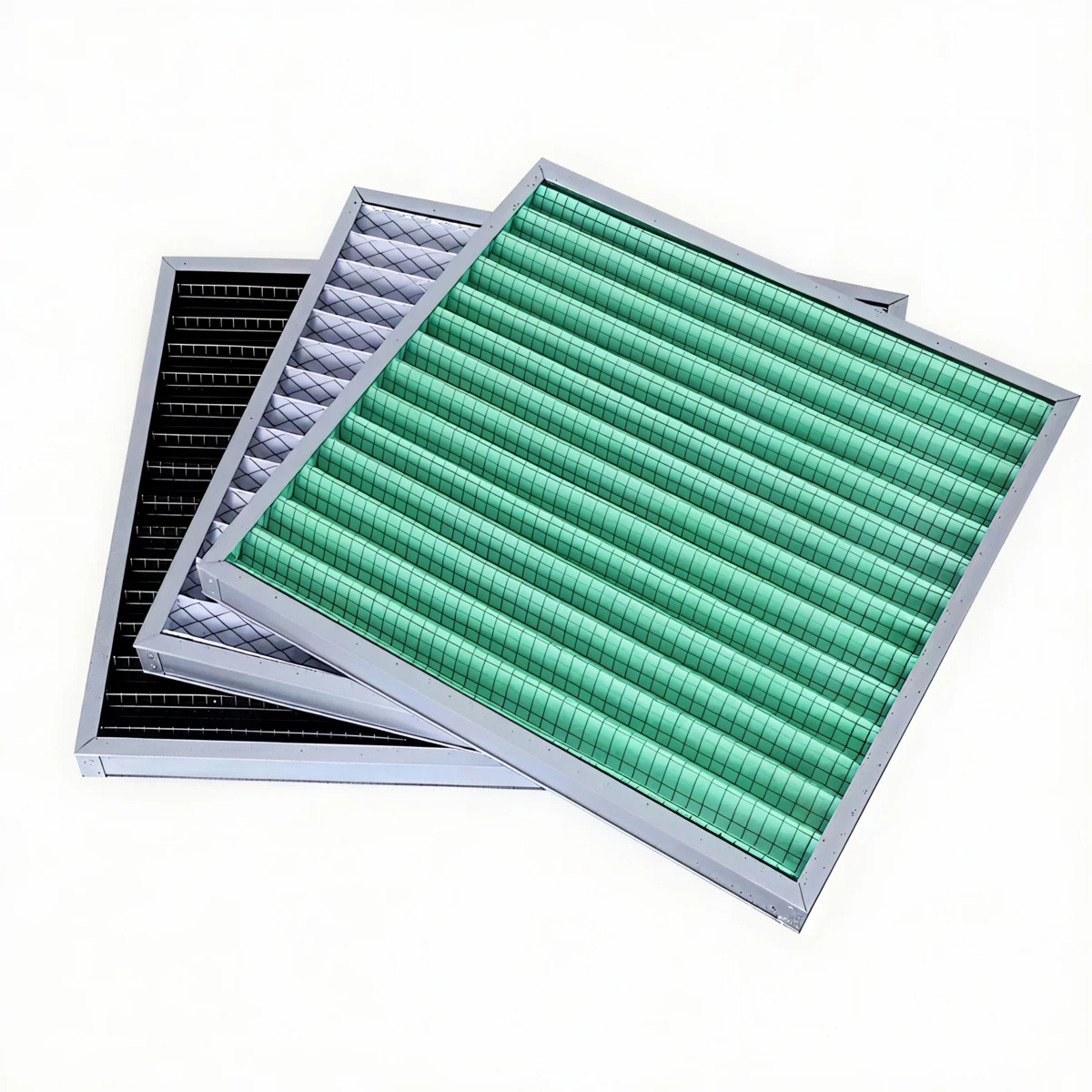
Choose the filter design by installation space and dust load
| Design | Typical application | Checks before ordering |
|---|---|---|
| Flat panel | Shallow fan-coil or outdoor-air unit slots with light dust loads | Actual frame thickness, slot dimensions and gasket position |
| Pleated panel | Commercial HVAC and outdoor-air units | Initial pressure drop at the selected airflow, pleat support and frame depth |
| Bag | Industrial or public-building ventilation with heavier dust loads | Pocket length, count and clearance from downstream components |
| Box | High-airflow systems with modular installation or service | Housing interface, internal filter specification, seals and service clearance |
Pleated filters fit more media area into a limited frame depth. Bag filters provide a large media area and require clearance for the pockets to inflate and be removed. For a retrofit, buyers should measure the opening, old frame and usable depth. Two filters with the same face dimensions can differ in thickness or gasket position. Panel filter sizing guide
Compare efficiency and initial pressure drop at the same airflow
If an existing label says G3 or G4, the purchasing specification should record both the grade and its test standard. When a project specifies ISO 16890 or ASHRAE 52.2, buyers should request the candidate model’s test report under the required standard. G4, ISO ePM and MERV come from different rating systems.
Initial pressure drop should always be paired with the airflow at which it was measured. Ratings of 50 Pa and 80 Pa measured at different airflows cannot establish which filter will offer lower resistance at the actual operating point. A supplier can provide the initial drop at that airflow or supply a pressure-drop curve.
For example, four filters operating in parallel in a unit designed for 7,200 m³/h would each handle about 1,800 m³/h if the flow divides evenly. The buyer can compare all models at 1,800 m³/h per filter against the pressure-drop allowance of the unit.
Select media for the environment and maintenance method
- Polyester nonwoven media. A common choice for general ventilation prefiltration. Cleaning and replacement follow the model instructions.
- Nylon mesh. An option where routine washing is required. Buyers should confirm the washing method, drying requirements and reuse conditions.
- Aluminum or stainless steel mesh. Options for hot or humid conditions. Temperature and corrosion compatibility should cover the frame, mesh, fasteners and seals of the complete filter.
- Activated-carbon composite media. An option when both particles and odors need to be controlled. The buyer should confirm the particulate grade and request adsorption data for the target gases.
Prefilters are one stage of a multistage system in hospitals, electronics cleanrooms and food-processing facilities. The project design determines the prefilter grade, downstream stages and acceptance criteria. Suppliers should confirm material compatibility for high temperatures, corrosive environments and cleaning or disinfection.
Six items to include in a request for quotation
- Application and environment. Intake, air-handling unit or return-air stage, with temperature, humidity, dust, oil mist and corrosive exposure.
- Efficiency and test standard. Specify the required grade and request the model’s test documentation.
- Airflow and pressure drop. Record system airflow, number of parallel filters, airflow per filter, initial pressure drop at that airflow and the project’s final pressure-drop limit.
- Measured dimensions and design. Include frame width, height and depth, opening dimensions and usable depth. List pocket length and count for bag filters.
- Frame, media and seal. Confirm frame material, gasket position, airflow direction and retention method.
- Maintenance and quantities. Specify washing or reuse requirements, service clearance, order quantity and spares.
For retrofit quotations, buyers can attach photos of the nameplate, frame and measured opening and ask the supplier to confirm dimensions, airflow and initial pressure drop on the quotation or drawing. G4 panel filter procurement checklist
Source
Adapted from BSCLEAN’s training material on prefilter selection, pages 10–20 and 27–32. The airflow calculation is illustrative. The project design and model-specific documentation govern actual specifications.
Frequently asked questions
Question 1. Is a flat or pleated panel better for commercial HVAC?
Answer. A flat panel suits shallow slots and light dust loads. A pleated panel offers more media area where the frame depth allows it. Compare initial pressure drop at the same operating airflow.
Question 2. Can a G4 filter be replaced with a particular MERV or ISO ePM rating?
Answer. Buyers should identify the test standard accepted by the project and obtain the replacement model’s report under that standard. Each rating applies within its own test and classification system.
Question 3. Can a bag filter replace a panel filter with the same face dimensions?
Answer. The change requires checking pocket length, expansion clearance, frame thickness and gasket position. If the pockets could touch the coil or fan, or service clearance is inadequate, the installation needs review.
Question 4. When should a prefilter be replaced?
Answer. The decision depends on the project’s final pressure-drop limit, airflow and media condition. Maintenance teams can record the initial reading and track it at comparable airflow. Damaged, wet or poorly sealed filters should be inspected promptly.
Question 5. Can prefilters be washed?
Answer. Only models identified as washable should be washed and dried according to their instructions. Disposable nonwoven filters and typical activated-carbon composite filters are normally replaced.
Submit selection parameters.
Share dimensions, airflow, application and quantity for product selection and a quotation.
Get a quote