Use & maintenance
Air Filter Transport and Storage Guide
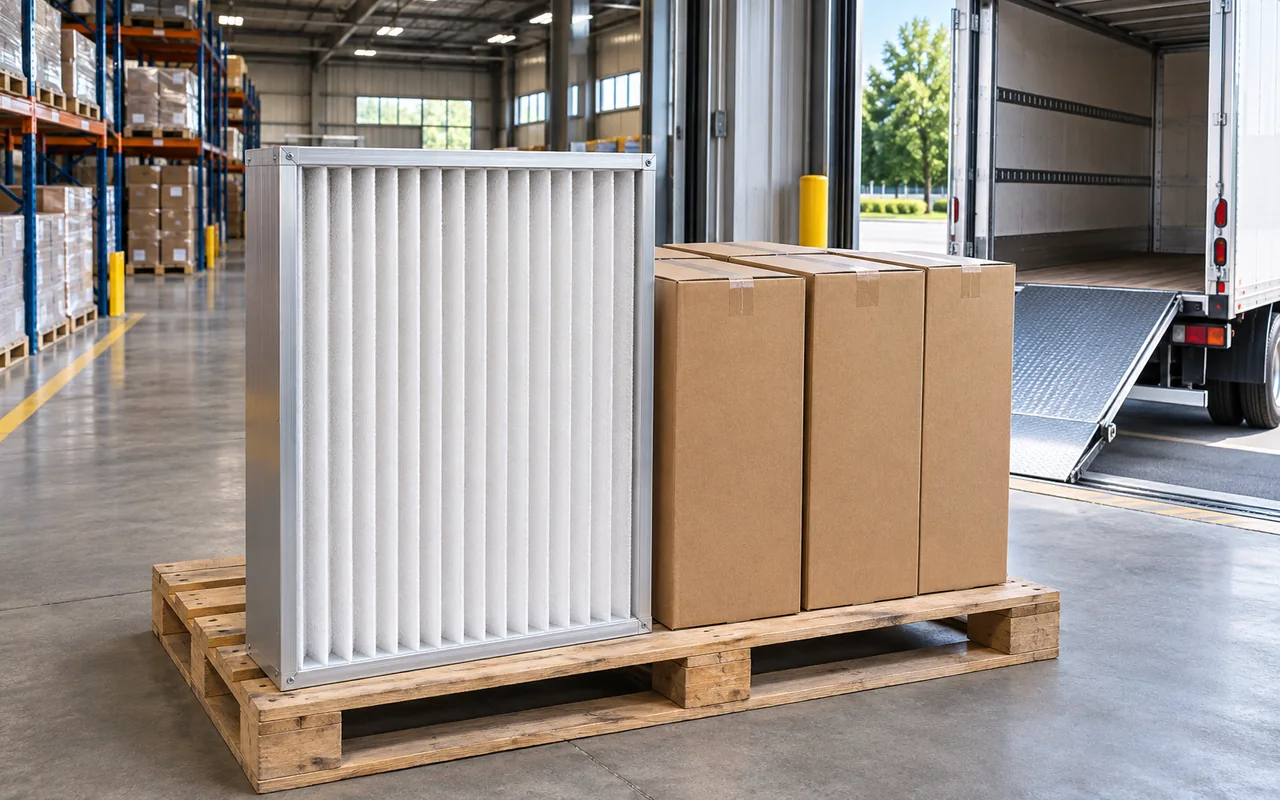
Follow the package orientation, protect filters from impact and moisture, secure loads in transit, and keep the original packaging in storage. Confirm stacking and shelf life by model.
Four checks before shipping air filters
- Orientation and lifting. Follow the orientation marks. Keep cartons upright where marked and support the base with both hands. Avoid dragging, dropping or turning cartons upside down.
- Impact and weather. Protect corners and load-bearing surfaces. Keep cartons away from rain, splashes and direct sun. Document and quarantine wet or crushed packages at receipt.
- Stacking. Confirm the carton stacking limit, load rating and permitted height. Slide 13 of the training material says no more than 2.5 m, while the inspection checklist on slide 16 says strictly below 2 m. Use the shipment instructions and packaging limits for the specific model. If a limit has yet to be confirmed, use a single layer and secure the load.
- Load restraint. Use appropriate straps or fixtures and protect carton edges at pressure points. Keep restraints from pressing on the filter frame or crushing the package.
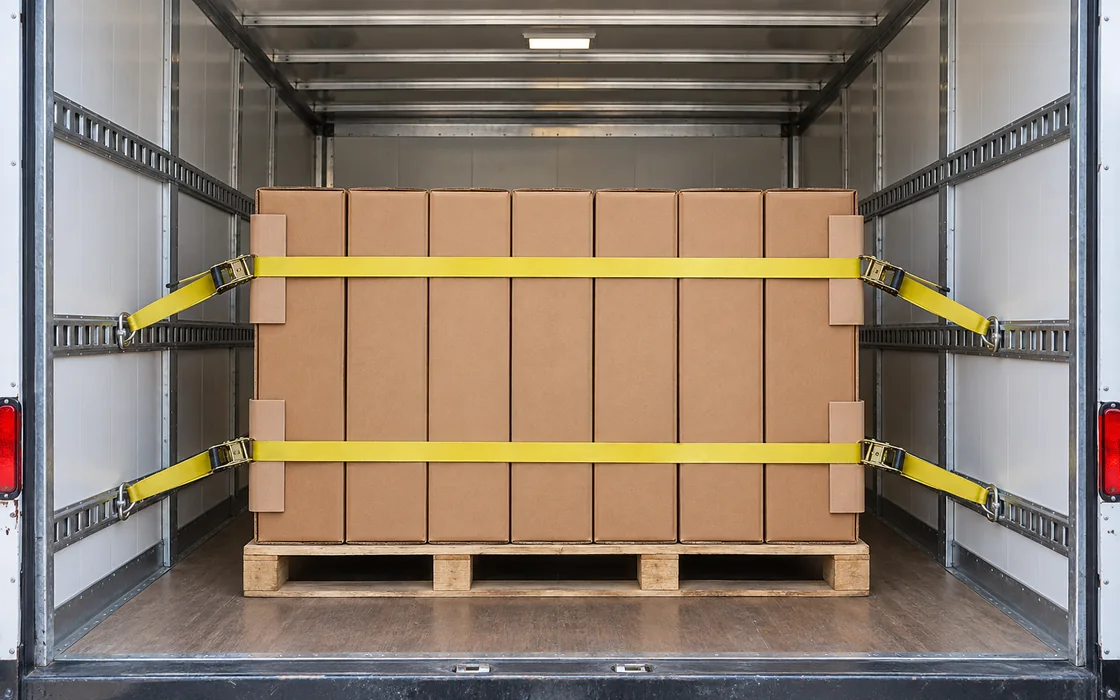
Load restraint illustration. Straps limit movement and corner protectors shield the cartons at pressure points.
Air filter warehouse reference conditions
| Item | Training reference | Warehouse check |
|---|---|---|
| Packaging and orientation | Upright in the original sealed packaging | Follow carton markings and retain model and lot details |
| Floor clearance | At least 10 cm | Use pallets to protect cartons from floor moisture and spills |
| Wall clearance | At least 30 cm | Leave space for airflow and inspection |
| Temperature and relative humidity | 15–30 °C and 40–60% RH | Ventilate, avoid direct sunlight and monitor against model instructions |
| Storage duration | Up to one year for gasket-seal units and two months for gel-seal units | Confirm the applicable model, start date and expiry with the supplier. Rotate stock first in, first out |
The figures above come from slides 14–15 of the training material. Follow the written storage conditions and shelf life for the specific model. Keep filters away from chemicals, corrosive vapors and oil contamination.
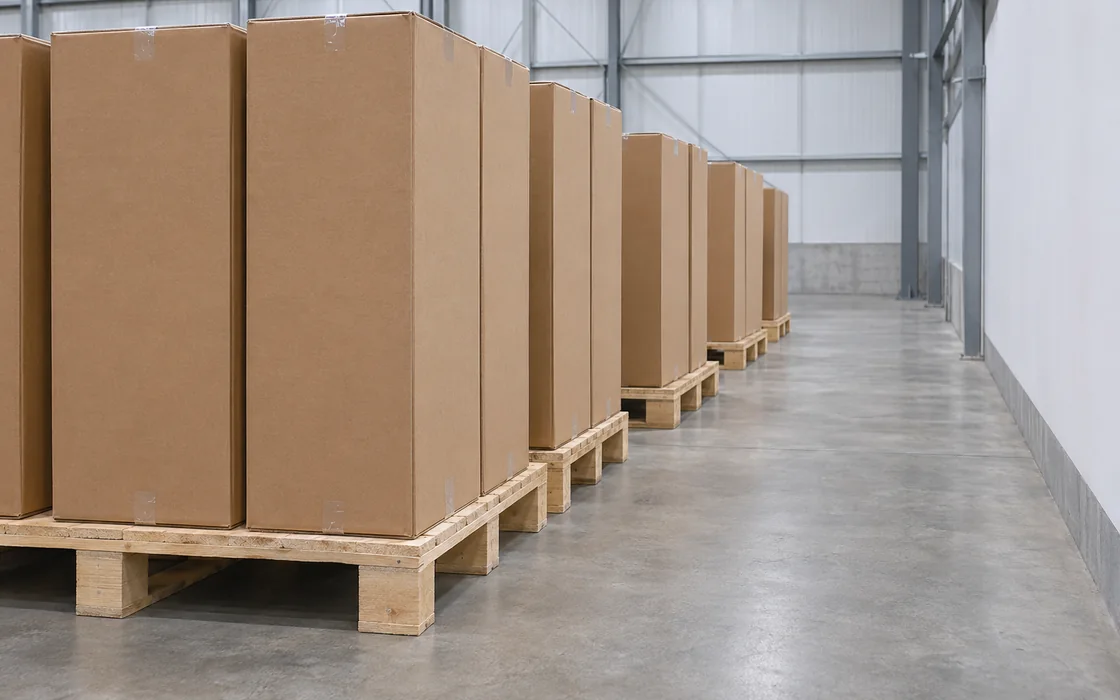
Storage illustration. Pallets raise the cartons off the floor, with clearance for airflow and inspection.
What damage should receiving teams flag?
An impact can tear the media. A bent frame may prevent the seal from seating and allow air to bypass the filter. Moisture, corrosion and oil can also impair the media. Photograph and isolate wet or damaged cartons and filters with bent frames, cracked gaskets or leaking gel channels. Record the model, lot and location of the defect for the quality team.
- Before unloading: Check carton direction, weather protection, stacking and restraint.
- At receipt: Confirm model, quantity, lot, packaging and expiration. Label quarantined stock.
- Before dispatch: Check storage dates and packaging condition. Rotate by lot using first in, first out.
Frequently asked questions
Can HEPA filters be shipped flat?
Follow the package orientation marks and manufacturer instructions. Keep cartons marked upright in that position during handling, shipping and temporary storage.
What temperature and humidity should an air filter warehouse maintain?
The training reference uses 15–30 °C and 40–60% relative humidity. Follow the model-specific requirements and prevent condensation and direct sunlight.
How long can a gel-seal HEPA filter be stored?
The training reference gives two months for gel-seal filters. Confirm the specific model, shelf-life start date and written directions with the supplier.
Source
Adapted from the training presentation *Air Filter Transport and Storage Management Guidelines*. Slides 8–10 cover damage and risk, slides 12–15 cover handling and storage, and slide 16 contains the site checklist. Have the model, seal type and lot number ready when requesting product-specific instructions.
Submit selection parameters.
Share dimensions, airflow, application and quantity for product selection and a quotation.
Get a quote